Thursday, October 22, 2026
The geography of full-remote work in Italy
How remote work transcends geographical boundaries and expands professional opportunities, even in the South
The major hubs for remote work
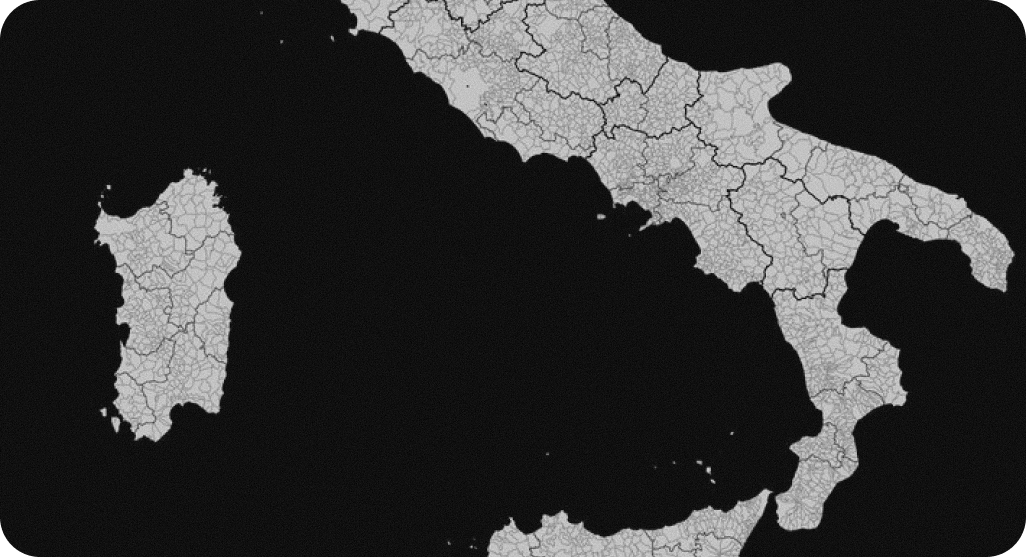
On an ideal map of remote work in Italy, the major hubs with the highest concentration remain dominant: Turin, Bologna, Rome, and Milan all range from 25% to 38% in their concentration of full-remote workers.
Opportunities beyond major urban centers
Yet, when we look toward urban centers not typically associated with major professional opportunities, very interesting data still emerges, highlighting a connection between local regions and the job market.
Southern Italy and the spread of full-remote work
According to Istat data from 2023, published just last February, the urban center in the South with the highest concentration is Cagliari, at 22%, followed by Naples, Bari, and Palermo, with a concentration of approximately 15%—surpassing the national average of around 13%.
Working without geographical boundaries
This is why it is so interesting to decouple the link between the North and professional opportunities. We are discovering that it is not uncommon for a freelancer to log in from the South to collaborate with a European company or an international startup.
Broader professional networks and new possibilities
This is precisely where an interesting perspective emerges: overcoming geographical boundaries allows for the construction of broader, more extensive professional networks, where one's place of residence does not dictate the market in which one works.
The freedom to choose how to work
In this scenario, being a freelancer, working full-remote, or being a digital nomad does not necessarily mean adopting an alternative lifestyle, but rather having the ability to choose between different ways of working, without geography acting as a limit to opportunity.